

Product in the seal area causes leakers. Heat can scorch a heat-sensitive product, and a weak seal ruins a full batch.
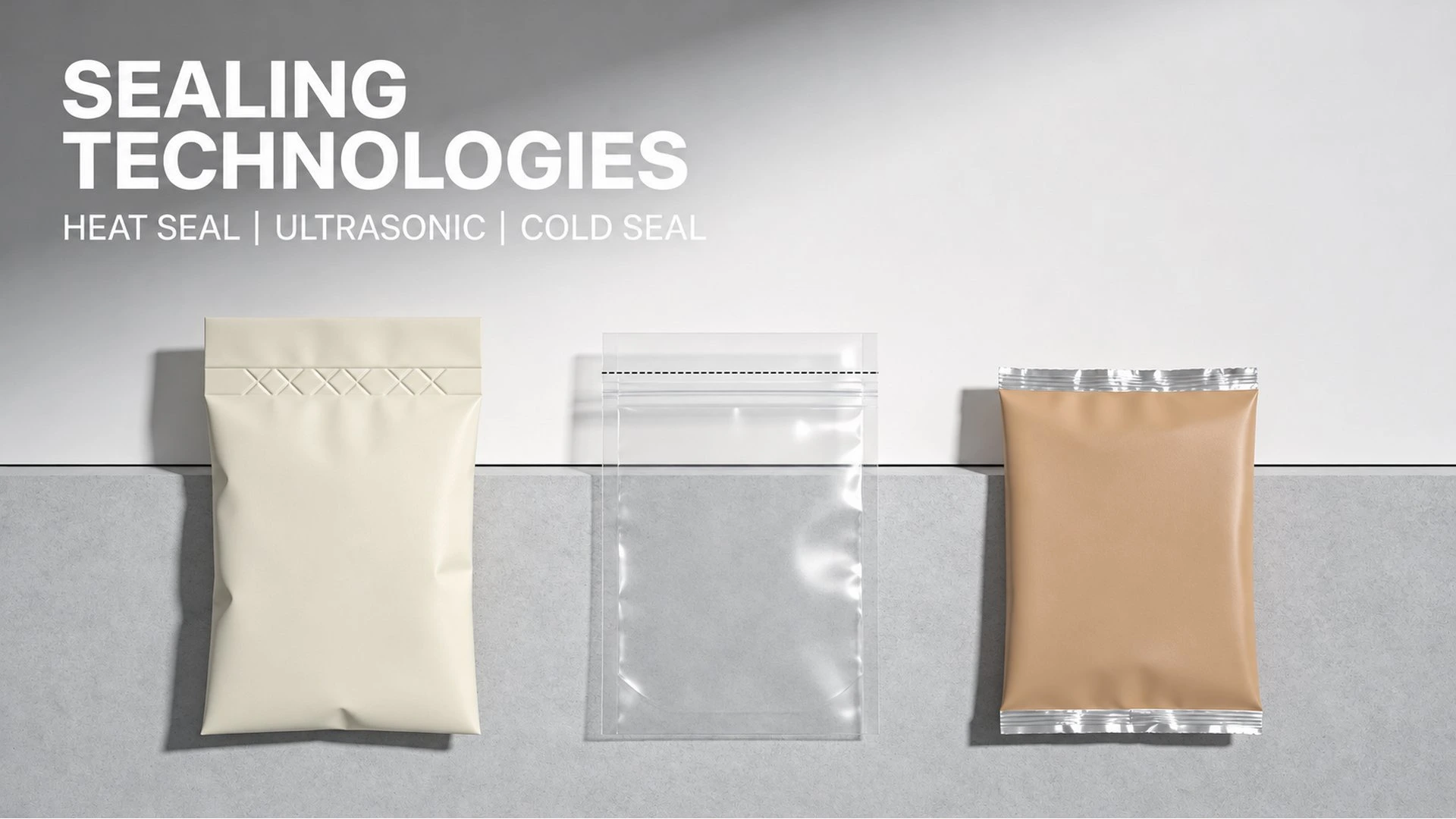
This guide compares ultrasonic sealing with heat sealing, side by side. It covers width, speed, energy, seal-through, cost, and fit, so the choice is clear.
Ultrasonic sealing uses sound waves, not heat. A sonotrode vibrates above an anvil, and the film molecules rub together and melt.
The weld forms from the inside out, and the jaws stay cool. No warm-up time is needed, so the line starts at once.
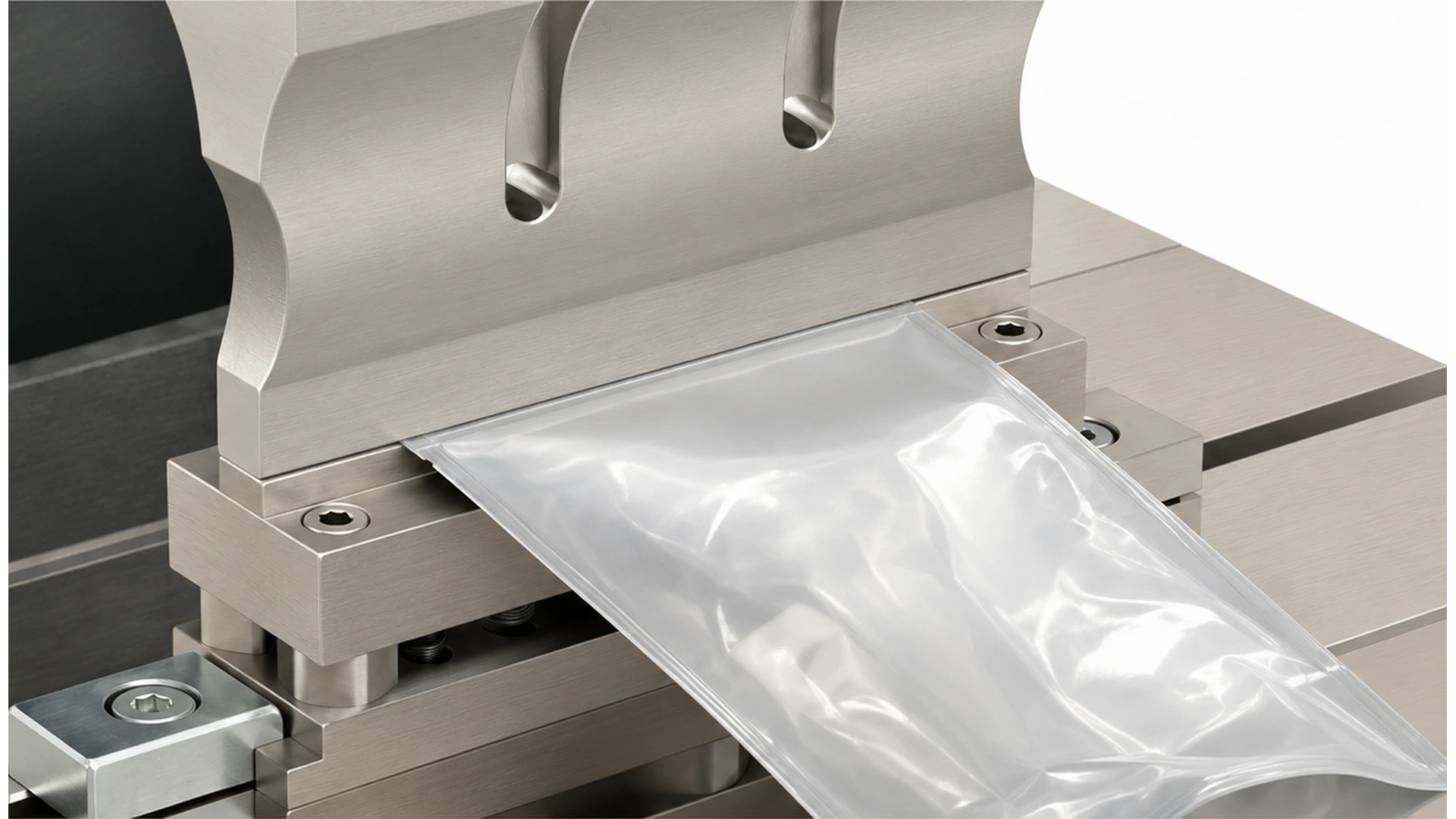
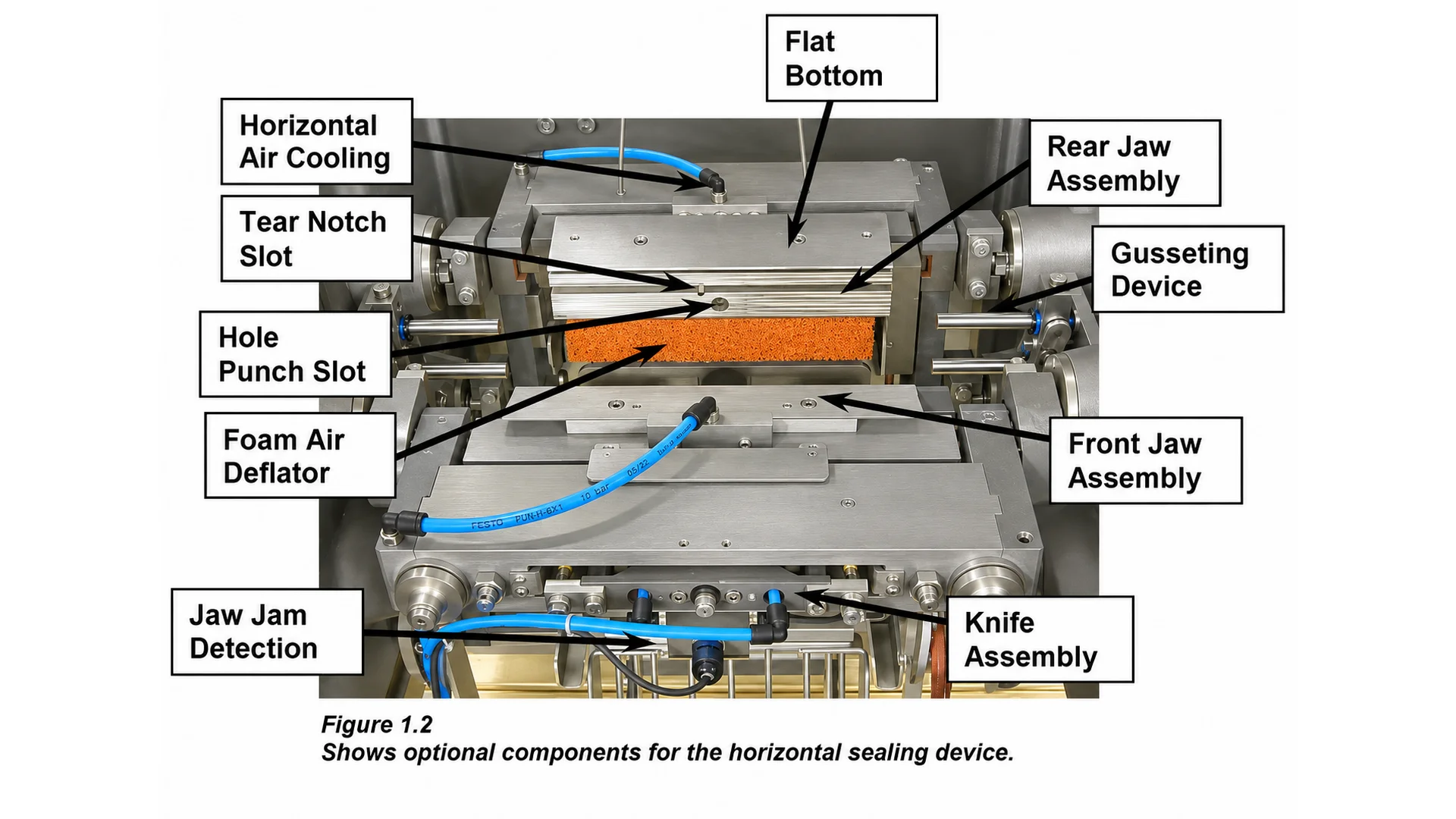
Heat sealing presses hot jaws onto the film. Heat moves from the outside in, and the film layers melt together.
The jaws stay hot between cycles, and the line needs warm-up time. A wide jaw gives a wide seal, and the seal looks strong.
A typical ultrasonic seal measures 4 mm wide, and a typical heat seal measures 6 mm wide. The gap is only 2 mm, so the film saving is small.
A narrow seal saves film on every bag, but some buyers prefer a wide seal. Snack brands often pick a wide seal for a stronger look on the shelf.
Judge the seal by strength, not by width alone. A 4 mm ultrasonic seal can hold as well as a 6 mm heat seal.
Heat sealing runs faster on the same line. Under the same conditions, it packs 40 or more bags per minute above ultrasonic sealing.
The ultrasonic method wins back time at start-up. It needs no warm-up, and each weld takes a fraction of a second.
A Rovema jaw change takes under 10 minutes, so one machine can switch methods. Run heat sealing for speed, and switch to ultrasonic sealing for a tricky product.
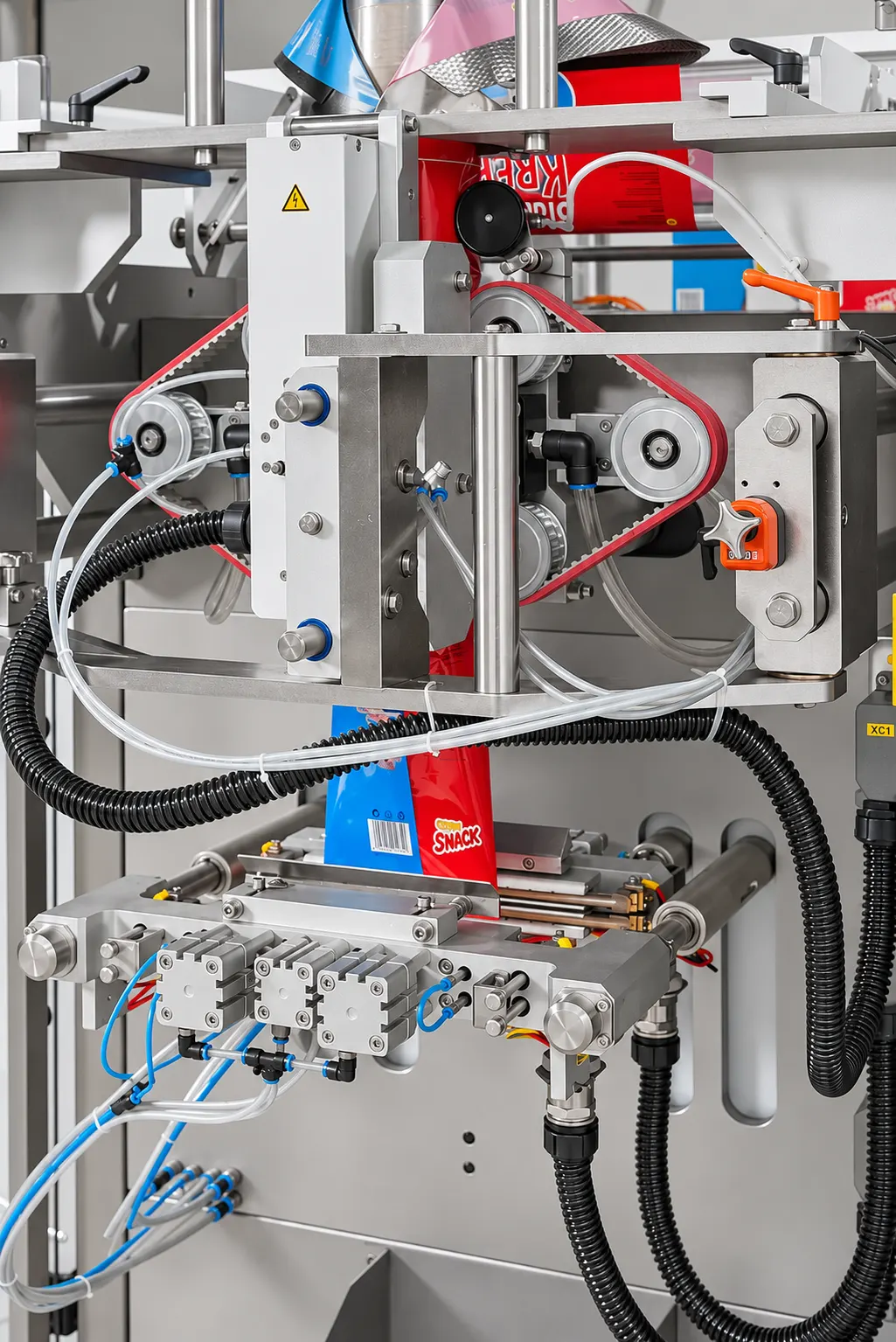
Ultrasonic sealing draws power only at the moment of sealing. Energy use stays almost flat as speed rises, because the weld is instant.
Heat sealing keeps its jaws hot all day. The bars draw power during idle time too, so the line burns energy between bags.
High output favors heat sealing on energy, and low output favors the ultrasonic method. Match the method to the daily volume, not to the label.
Ultrasonic waves push product out of the seal area and weld through it. Fresh salad, powder, and crumbs seal clean, with fewer leakers.
Heat sealing needs a clean seal area. Product trapped in the seal leaves a weak spot, and the bag leaks on the shelf.
Heat-sensitive goods are a different case. Chocolate and cheese can sit behind a bevel plate, so heat sealing still works for them.
Adding the ultrasonic option costs over $50,000, a typical figure for the upgrade. The saving on film and energy takes years to pay it back.
A spare heat jaw costs $1,500–2,000. A sonotrode costs 3–5 times that, and the jaw holder plus sonotrode insert runs to about half the system price.
Judge the total cost, not the purchase price. Count film, energy, rejects, and changeover time across a full year.
Pick the ultrasonic method when product often lands in the seal area. Salad, fresh produce, and powder lines gain the most from it.
Pick heat sealing when speed comes first. High-volume lines and wide-seal looks both favor heat sealing.
Check four items before you order: the product, the film, the speed target, and the total cost. The right method fits all four.
Ultrasonic sealing seals through product and saves energy at low volume. Heat sealing runs faster and costs less to add. Match the method to the product, and the seal holds. Talk to LINK Machinery, a CE and RoHS certified China factory, for a VFFS machine sized to your line.
1. How much energy does ultrasonic sealing save?
It uses up to 75% less energy than heat sealing, a typical figure from Herrmann Ultrasonics. A line that runs short batches saves the most, because the saving grows with every idle hour between runs.
2. Can ultrasonic sealing cut your leaker rate?
Yes. The weld can reach a 100% hermetic seal, a typical claim from Triangle. In one produce case, lettuce and spinach packs needed less than 1% rework. The line then dropped its 100% manual leaker check.
3. What is closed-loop feedback on an ultrasonic sealer?
Closed-loop feedback checks every bag as it seals. The system reads each weld and flags a bag that fails. A bad bag never reaches the carton. The operator sees the fault at once and fixes the setting before the next run.
4. Can you add ultrasonic sealing to a VFFS machine you already own?
Yes. Rovema offers it for machines already in the field, and Triangle has offered it as an X-Series option since 2012. The upgrade adds a sonotrode and an anvil to the sealing station. Ask the machine maker for a retrofit quote before you order a new machine.
5. How small a bag can ultrasonic sealing run?
Triangle runs it on bag widths from 2.75 inches, on its compact XYS08 bagger. Small bags need a narrow forming tube and a matching jaw set. Check the smallest bag in the range before picking the machine.
6. Is ultrasonic sealing food-safe?
Yes. Triangle calls its ultrasonic baggers a food-safe solution for produce, confectionery, and cheese. The X-Series can meet USDA and 3A standards, so the sealing station suits sanitary lines. Confirm the standard with the machine maker before you order.

O email : Molly@xmlk-machine.com
Envia-nos um email
Room 810, No. 35-2 Xinjing Road, Haicang, Xiamen, Fujian, China
Nosso endereço
Tel : +86 18150150881
Whatsapp : +8618150150881
ligue para nós


 português
 English
 français
 ไทย
