

The wrong machine crushes gummy candy, sticks to hard candy, and smears chocolate. You run a candy line, and buyers expect every bag clean and full.
This guide shows how a candy packaging machine protects your line. It covers candy types, bag forms, accuracy, selection, and running costs.
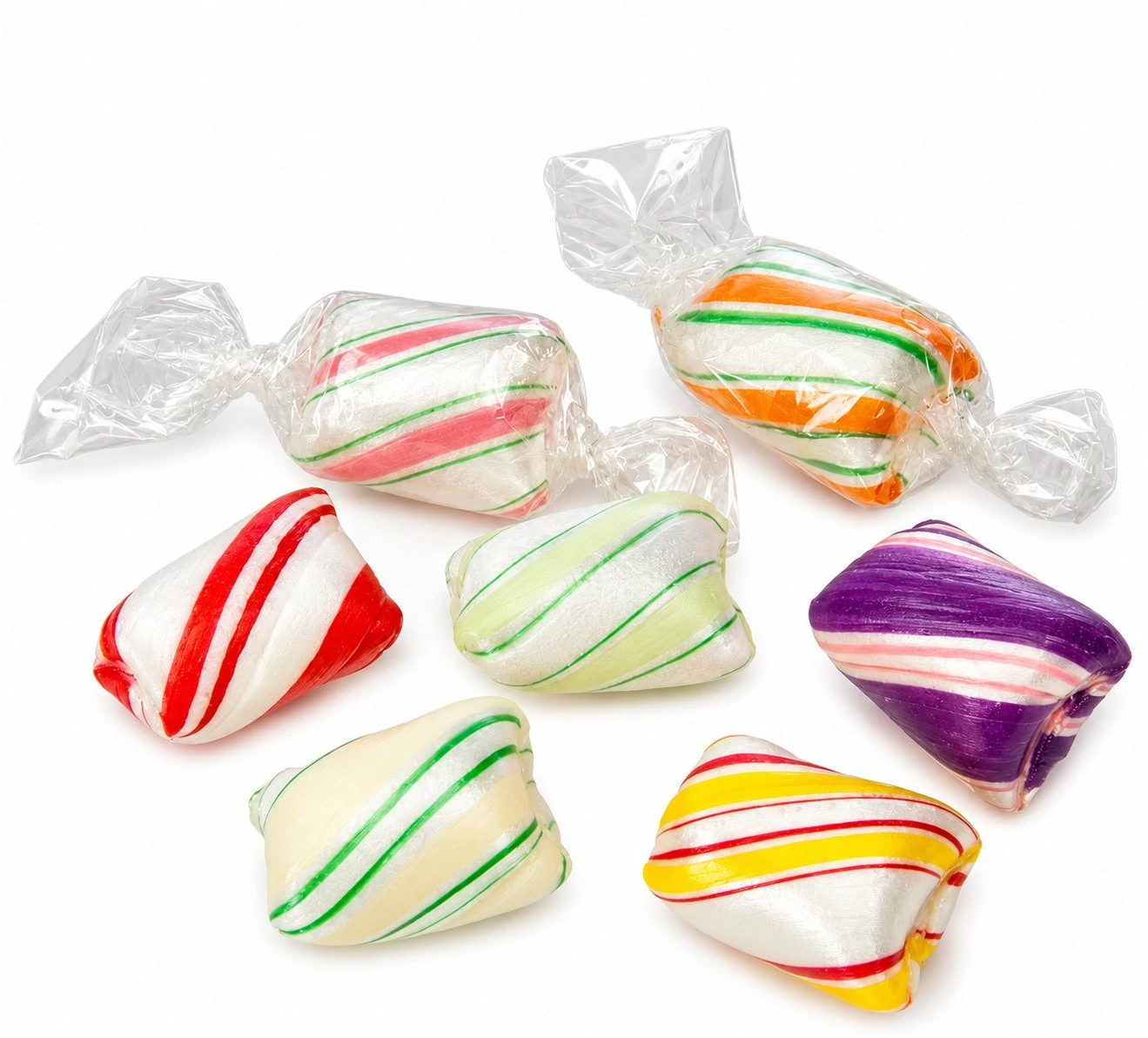
Hard candy is dry, firm, and free-flowing. A candy packaging machine weighs it by count or by weight, then drops it into a pillow bag. A typical line runs 60–120 bags per minute for small hard candy packs.
Keep the candy dry before it reaches the machine. Moisture makes hard candy sticky, and sticky pieces jam the weighing cups.
Gummy candy is soft, sticky, and easy to crush. The filling tube must be wide, or pieces jam on the way down. A slow drop keeps the pieces whole and the count steady.
Dust the gummy with a light coat of oil or starch before packing. The coat stops pieces from sticking to each other in the bag.
Chocolate melts above 30°C, so the packing room must stay cool. A candy packaging machine packs chocolate fast, before the heat from the line softens it. Keep the room at 18–22°C and the chocolate below 25°C.
Use a flow wrapper for chocolate bars and a VFFS unit for small chocolate pieces. Both keep the chocolate cool and the coating unmarked.
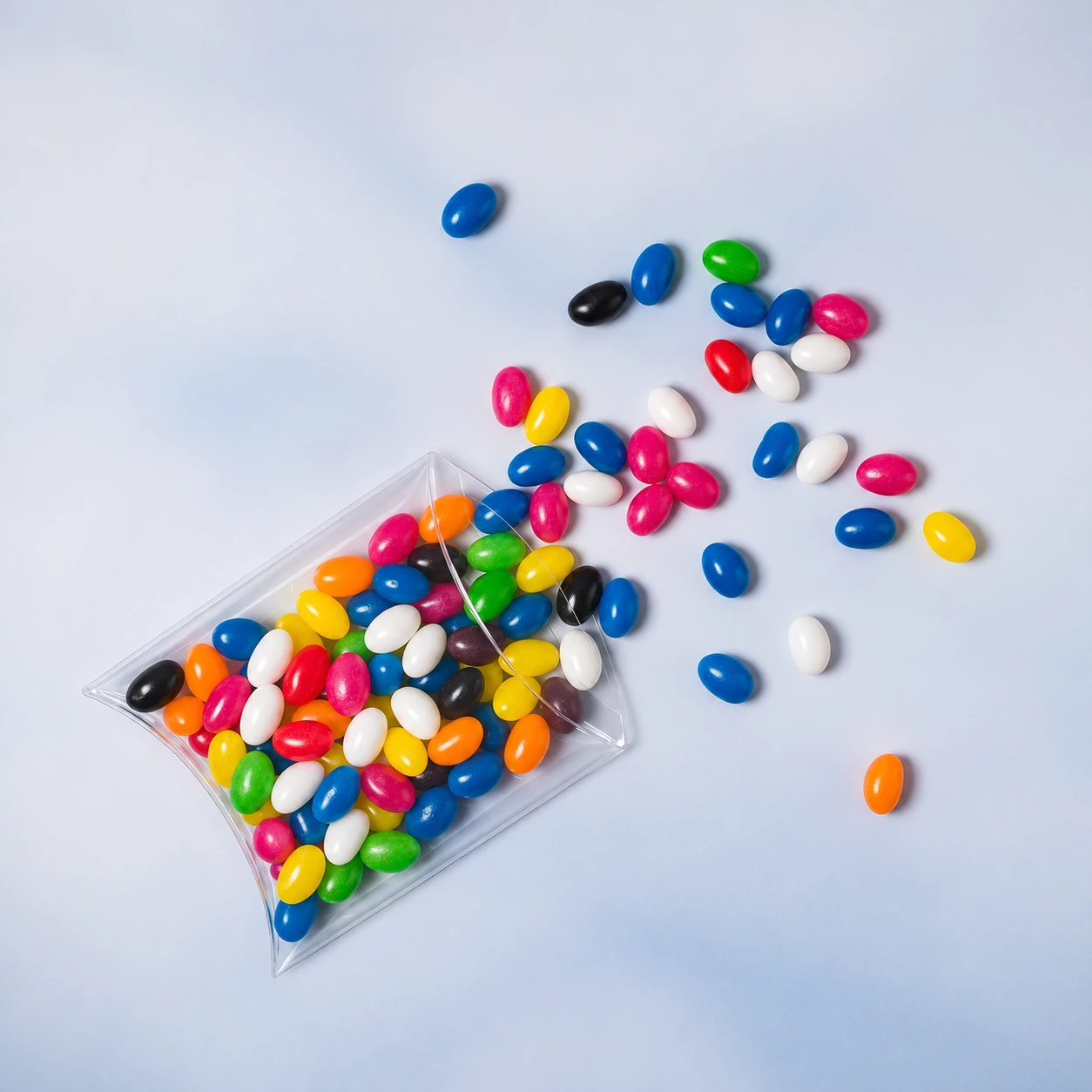
A pillow bag is the cheapest form for small candy packs. The machine forms a tube, fills it, and seals both ends. It suits hard candy, gummy, and small chocolate pieces in packs of 5–100 g.
Pillow bags stack well in a carton and ship cheap. They also take a printed film, so your brand shows on the shelf.
Twist wrap suits single hard candies and lollipops. The machine wraps each piece in a twist of film or foil. A typical twist wrapper runs 300–600 pieces per minute.
Twist wrap costs more per piece than a pillow bag. Use it when the candy sells by the piece, not by the bag.
A stand-up pouch suits larger candy packs and gift packs. The pouch stands on the shelf and takes a zipper for reclosing. A premade pouch machine fills it at 20–40 pouches per minute.
Stand-up pouches cost more in film and in machine price. Use them when the pack must look premium on the shelf.
Accuracy is not one number on a data sheet. The candy, the weigher, and the pack all move the result.
A multihead weigher weighs candy in small cups and picks the best mix. It suits gummy, hard candy, and mixed packs. It keeps the count steady even when pieces differ in size.
A screw feeder suits powders and fine granules, not candy pieces. Pick the weigher by the candy shape, not by the price.
Count candy when each piece must be exact, such as 10 pieces per bag. Weigh candy when the pack sells by weight, such as 100 g per bag. A counting unit runs slower than a weighing unit on the same line.
Check the count with a checkweigher after the bag is sealed. A short bag costs a customer; a long bag gives product away.
Sticky candy clings to cups, tubes, and film. A candy packaging machine needs non-stick surfaces and a gentle drop to keep it moving. A cool, dry room keeps the candy from sticking more.
Keep the packing room cool and dry, because heat and moisture make candy stickier. Clean the contact parts each shift, so residue never builds up.
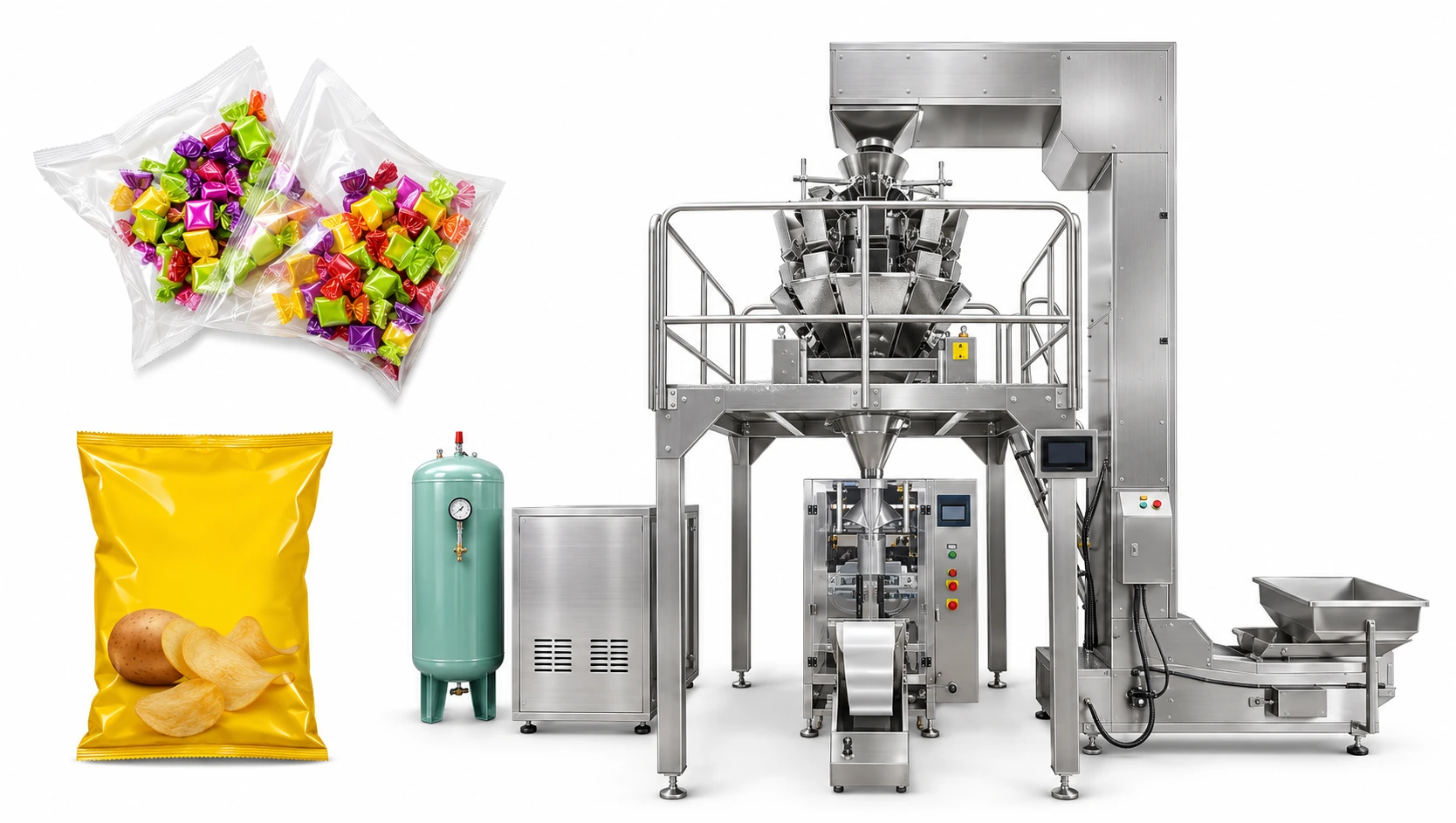
A VFFS candy packaging machine forms, fills, and seals a pillow bag from a film roll. It suits hard candy, gummy, and small chocolate pieces. A typical VFFS unit runs 30–80 bags per minute on candy.
Use a VFFS unit when the pack is a pillow bag under 500 g. It costs less than a premade pouch machine and changes over faster.
Check the bag size against the machine frame. A typical standard frame forms bags 60–200 mm wide and 50–300 mm long, with a film width of 180–420 mm.
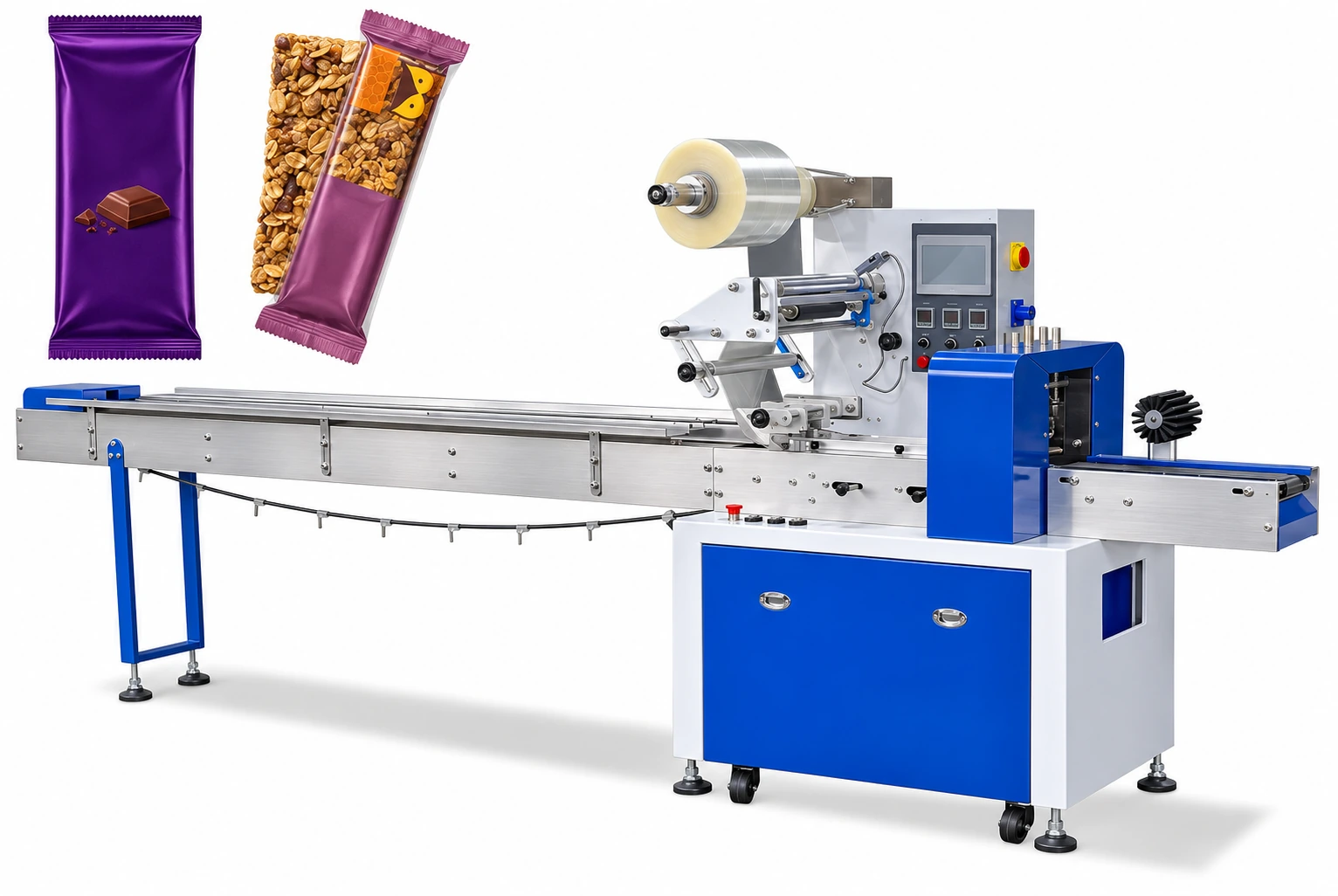
A horizontal flow wrapper wraps single pieces or bars in a pillow of film. It suits chocolate bars, single hard candies, and lollipops. A typical flow wrapper runs 100–300 pieces per minute.
Use a flow wrapper when each piece sells on its own. It needs a steady infeed, so the pieces must arrive spaced and in line.
Match the wrapper to the piece size first, then to the speed. A wrapper that runs 100–300 pieces per minute fits bars and single pieces, not bulk bags.
Start with the candy type, then the bag form. The machine must fit both, or the line will jam. Then set the speed target from your real output, not the brochure speed.
Match the machine to four numbers: bag size, speed, accuracy, and changeover time. A VFFS unit runs 30–80 bags per minute on small packs of 5–100 g. A flow wrapper runs 100–300 pieces per minute on single pieces. Set the accuracy target at ±0.5–1 g and the changeover at 15–30 minutes.
Check the weigher and the film as well. Granule VFFS units cover 10 g–2,500 g per bag. Use film 0.04–0.08 mm thick for candy bags. Match the film width to the bag width before you order.
Test the real candy, the real film, and the real bag size before you order. Check the changeover time, the cleaning access, and the floor space it takes. Buy the smallest machine that still hits your speed target at full output.
A VFFS unit costs less than a premade pouch machine of the same speed. Options like a multihead weigher, a printer, or a gas flush add to the price. List the options the buyer requires before asking for a quote.
A twist wrapper costs more per piece but suits single candies. A VFFS unit costs less per bag and suits mixed packs.
A recipe change means a new bag size, a new film, and a clean. A fast changeover keeps the line running when orders switch often. Plan the film and the tools before the line stops.
Clean the contact parts each shift, because sugar dust builds up fast. A clean machine jams less and keeps its speed.
Giveaway is the candy you pay for but never sell. A candy packaging machine with a good weigher keeps giveaway below 1%. Aim for a reject rate below 0.5% once the line is set up.
Check the reject bin each hour to spot a filling drift early. A drift caught early saves a whole batch.
A candy packaging machine is as good as its match to the candy. Pick the machine for the candy type and bag form, test it with product, and keep it clean. Talk to LINK Machinery, a CE and RoHS certified China factory, and get a machine sized for the line.
1. What candy packaging machine suits gummy candy?
A VFFS unit with a multihead weigher suits gummy best. The weigher picks the best mix without squeezing the pieces. Test the stickiest gummy on the machine before ordering.
2. Can one candy packaging machine pack hard candy and chocolate?
Yes, if the machine handles both shapes and the room stays cool. Hard candy needs a fast drop and a dry room. Chocolate needs a cool room and a gentle touch, or the coating smears.
3. How accurate is a candy packaging machine at weighing?
A typical 10-head weigher weighs candy in 10 small cups. It mixes small and large pieces, so uneven pieces still hit the target. Set the target from your real packs, and check the first bags of each run.
4. Which bag form fits a candy packaging machine best?
A pillow bag fits most candy packs. It costs the least in film and runs the fastest on a VFFS unit. Use a stand-up pouch when the pack must look premium or take a zipper.
5. How does a candy packaging machine handle sticky candy?
Use a machine with non-stick cups and tubes. A vibratory feeder shakes sticky pieces loose before they reach the weigher. Run a short test with your stickiest candy before you order.
6. What changeover time does a candy packaging machine need?
Time the first changeover on the real line, and use that time in the production plan. Keep a spare film roll beside the machine, so the line never waits on film. A line that runs three recipes a day needs the shortest changeover it can get.

O email : Molly@xmlk-machine.com
Envia-nos um email
Room 810, No. 35-2 Xinjing Road, Haicang, Xiamen, Fujian, China
Nosso endereço
Tel : +86 18150150881
Whatsapp : +8618150150881
ligue para nós


 português
 English
 français
 ไทย
